


A section with key insights from State of Pet Adoption Platform Insights 2025
Unsuccessful adoptions: the case of repeated listing of individual pets
Pets that are listed more than once on PetRescue.com.au represent a distinct group, often reflecting previous unsuccessful adoption attempts or transfers between organisations. Understanding patterns within this cohort is important for building a clearer picture of how these pets are progressing through the system and where additional support may be needed. This insight helps inform ongoing efforts to promote safe, appropriate and successful matches for both pets and adopters.
Between 1 July 2019 and 31 December 2025, 12,271 unique pets (identified by microchip number) were listed more than once on the PetRescue platform, generating 27,686 total listings from a total of 420,449 (6.6% of all listings).
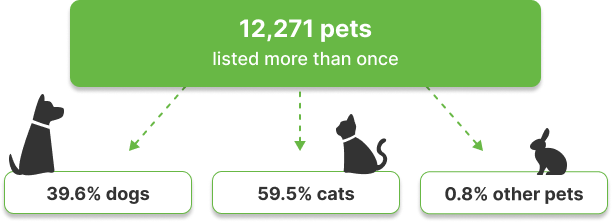
By species, repeat listings broke down as:
🐈 Cats: 59.5% of repeat listings
🐕 Dogs: 39.6% of repeat listings
🐇 Other pets: 0.8% (predominantly rabbits)
The most common reasons a pet ends up listed on the platform more than once are:
- unsuccessful adoptions (the pet was adopted and then returned)
- transfers between organisations (for example, a pet listed by a council shelter that was then transferred to a local rescue, who listed the pet under their own profile).
Most pets in this category were listed twice (89.2%), with 7.8% listed three times and 3% listed four or more times.
Of the 12,271 pets listed more than once:
- 🐈 5,274 cats (72.2% of cases) were marked as adopted between their first and second listing
- 🐕 3,218 dogs (66.2% of cases) were marked as adopted between their first and second listing
This indicates these were unsuccessful adoptions, where the pet was adopted and then returned to care.
Anecdotally, the sector is aware that some pets experience an unsuccessful adoption through one organisation and are then surrendered to a different organisation by the adoptive owner.
This pattern points to more than just a poor match between pet and adopter, it can indicate a breakdown in the relationship between the adopter and the organisation that placed the pet, or concerns about the pet's future if returned to care with the same organisation.
Of the 11,601 pets that were listed more than once and adopted at least once, 4,506 (38.8%) were listed by different organisations.
These included:
- 🐈 2,934 of 7,130 cats (41.2%)
- 🐕 1,629 of 4,616 dogs (35.3%)
The remaining approximately 61% of repeat-listed, adopted pets were re-listed by the same organisation, most likely representing returns after an unsuccessful adoption placement.
The pets who never found a home
683 pets (5.6% of repeat listings) were never marked as adopted across any of their listings, including 300 cats and 369 dogs. These are the highest-risk pets on the platform. Despite clear and repeated efforts by member organisations, they were removed from listing without ever being marked as adopted. When looking at what these pets had in common, some clear patterns emerge:
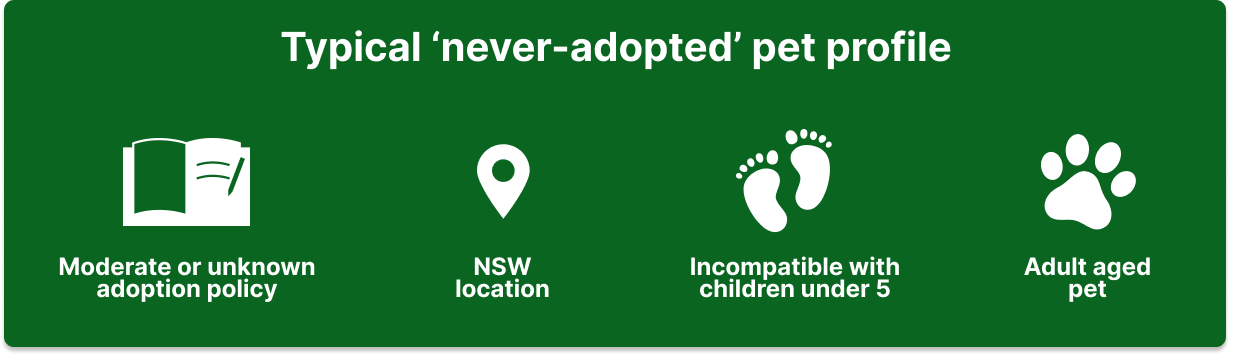
🐕 The typical never-adopted repeat dog was an adult, medium-to-large male in NSW, incompatible with children under 5, incompatible with other dogs, and listed by a shelter or rescue group with a moderate or unknown adoption policy.
🐈 The typical never-adopted repeat cat was an adult, medium-coat male in NSW, incompatible with children under 5, and listed by a rescue group with a moderate adoption policy.
Three factors were consistently the strongest predictors of never being adopted, across both species:
- NSW location: the single most powerful geographic signal
- Incompatibility with children under 5: the strongest behavioural and restriction signal
- Adult age: older pets are consistently harder to place permanently
QLD and VIC were both heavily underrepresented in this group, suggesting these states' rescue ecosystems are more effective at finding permanent placements even for pets that are harder to place, or that these types of pets are less likely to be advertised for adoption in these states.

Jump to specific insights from the report:
| 1. | About PetRescue and the State of Pet Adoption Report Series |
| 2. | PetRescue.com.au visitor behaviour and adopter characteristics |
| 3. | General characteristics of PetRescue.com.au enquirers |
| 4. | Interactions between household characteristics and pet species of interest |
| 5. | Demand and interest in rescue pets on PetRescue.com.au |
| 6. | PetRescue member organisations |
| 7. | Pet adoption trends on PetRescue.com.au |
| 8. | Unsuccessful adoptions: the case of repeated listing of individual pets (current page) |
| 9. | Animal care and adoption trends by location and socioeconomics |
| 10. | Understanding the rescue pet adoption landscape |
| 11. | How rescue pets find homes |
| 12. | Looking ahead |
| 13. | State profiles |
Images: Canva, unless captioned otherwise.