


A section with key insights from State of Pet Adoption Platform Insights 2025
Interactions between household characteristics and pet species of interest
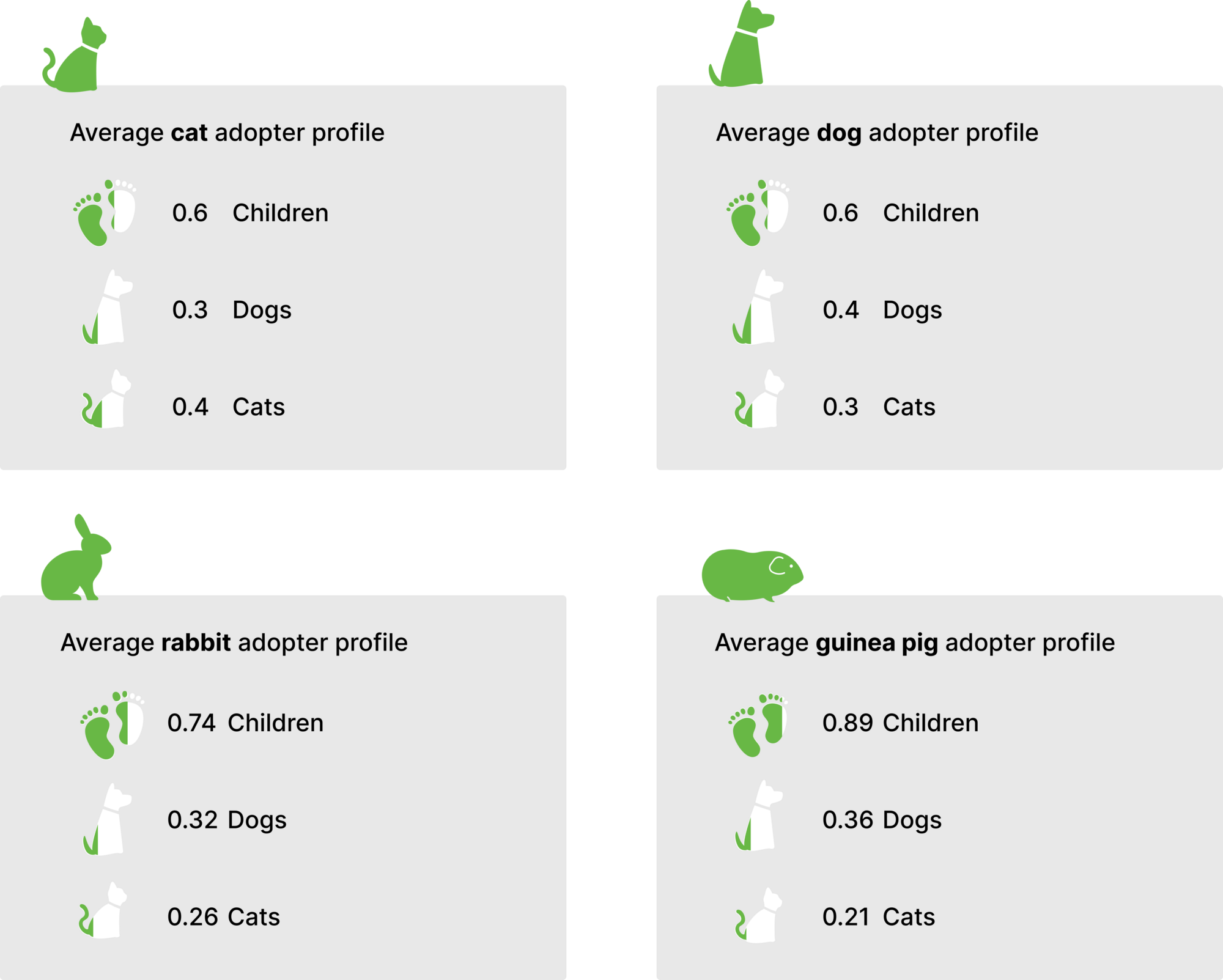
Households with cats were more likely to enquire about available cats than other types of pets, while households with dogs were less likely to enquire about cats than owners of other pets.
Average adopter profiles and species of interest
Research investigating human preferences for dogs or cats as companions shows that self-identified species preferences are correlated with overall lifestyle characteristics, and impact the way in which guardians care for their pets.
🐈 Cat guardians who self-identify as preferring cats are more likely to live in urban environments, to feed prescription diets to their cats, and to engage their cats in both active play and passive bonding time than 'dog people' who also owned cats.
🐕 Dog guardians were twice as likely to live rurally than in urban environments, were more likely to feed a raw diet, and are more likely to engage in activities and play with their dogs, than 'cat people' who also owned dogs.
🏠 'Dog people' were more likely to own cats than the other way around, resulting in more mixed-species households having 'dog people' as pet guardians. Generally, more people identify as preferring dogs than who own dogs, while cat ownership more closely matches species preferences.
Read about Sven and Benji's Happy Tail
This may be because of greater practical barriers to dog ownership, such as lack of yard space, time commitments and cost of ownership, compared to cat ownership. This may result in potential dog adopters self-selecting to adopt cats as companions, until they feel their lifestyle is more suited to meeting the dog's needs. Cats are often perceived as being more adaptable to high intensity living environments, such as inner urban areas or in rental properties, and so have a broader audience of adopters.
Dog and cat enquirers submit more enquiries on average than those looking for other species of pets. Families with children are more likely to apply to adopt pocket pets such as rabbits and guinea pigs, than cats and dogs.
The typical dog household
The typical Australian dog household:
- Homeowner or long-term renter
- House with yard
- Couple or family
- Suburban or regional
- Most likely one dog
- Perceives themselves as 'ready for a dog' based on their lifestyle
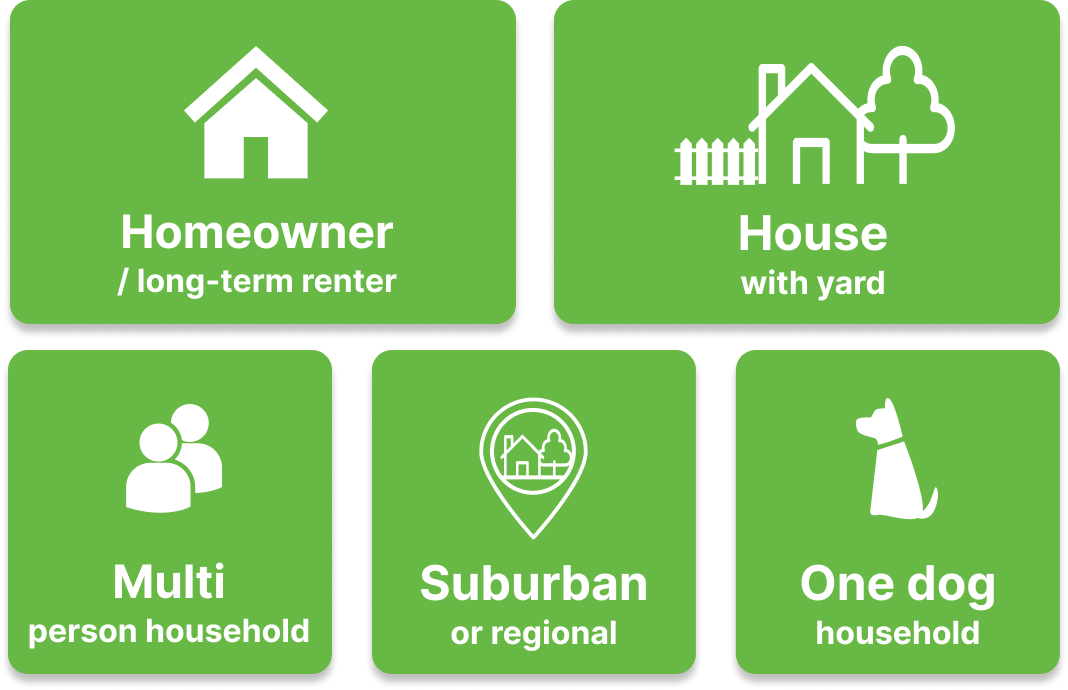
Even when kids aren't present, the typical dog household structure looks remarkably similar to one that could support them — stable housing, multiple adults, and plenty of space. This mirrors a growing trend, particularly among younger Australians and Gen Z, of getting a dog as a first major life commitment, often in place of or before having children. [Reference]. For this cohort, adopting a dog signals readiness for a bigger responsibility and a desire to build their own version of family life.
The typical cat household
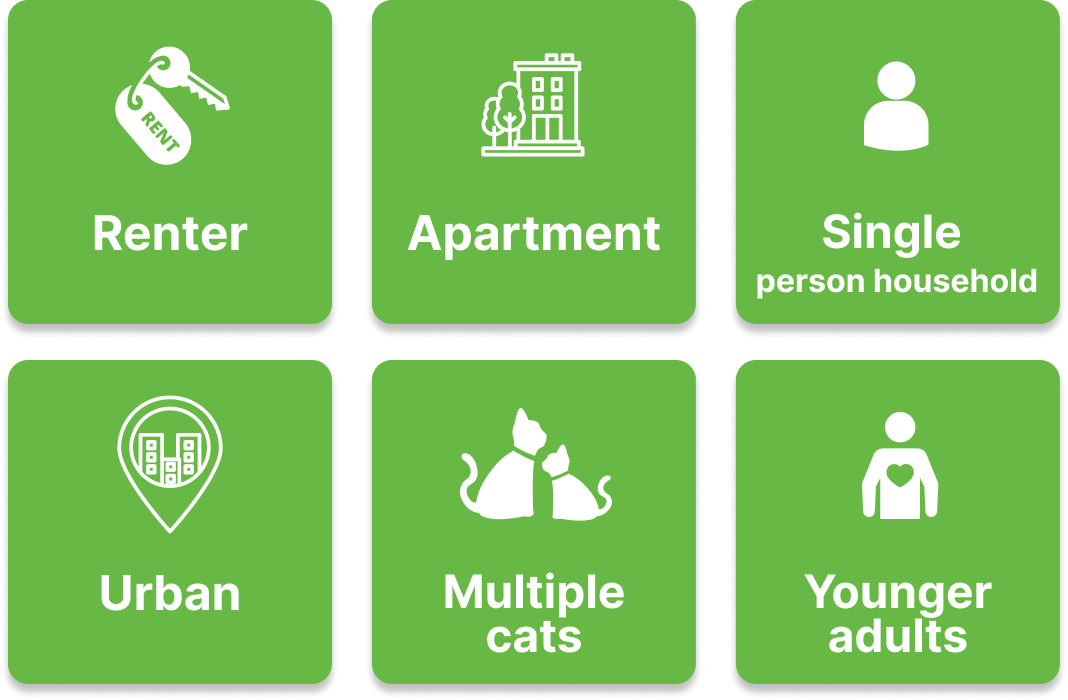
The typical Australian cat household:
- More likely to rent or live in an apartment
- Urban
- Higher share of single-person households
- Younger adults
- More likely to have multiple cats
- Uses more constraint-driven decision-making when bringing a new pet home

Jump to specific insights from the report:
| 1. | About PetRescue and the State of Pet Adoption Report Series |
| 2. | PetRescue.com.au visitor behaviour and adopter characteristics |
| 3. | General characteristics of PetRescue.com.au enquirers |
| 4. | Interactions between household characteristics and pet species of interest (current page) |
| 5. | Demand and interest in rescue pets on PetRescue.com.au |
| 6. | PetRescue member organisations |
| 7. | Pet adoption trends on PetRescue.com.au |
| 8. | Unsuccessful adoptions: the case of repeated listing of individual pets |
| 9. | Animal care and adoption trends by location and socioeconomics |
| 10. | Understanding the rescue pet adoption landscape |
| 11. | How rescue pets find homes |
| 12. | Looking ahead |
| 13. | State profiles |
Images: Canva, unless captioned otherwise.