


A section with key insights from State of Pet Adoption Platform Insights 2025
Animal care and adoption trends by location and socioeconomics
Unless otherwise noted, the data in this section covers combined PetRescue.com.au data for the period of 1 July 2019 to 31 December 2025.
It is increasingly recognised in Australia and internationally that the movement of pets into and out of the pet management and adoption system flows from low socioeconomic communities experiencing higher levels of disadvantage to those with higher disposable income and greater advantage.
Factors contributing to this flow act at both pre-intake and adoption levels, and highlight multiple layers of systemic challenges and biases that contribute to the high level of separation of pets from their disadvantaged families.
As discussed in the 'PetRescue Finding Another Way Home' report and in Australian research investigating the applicability of The Impact of Social Determinants of Human Health on Companion Animal Welfare, factors that result in the comparatively high flow of pets into the system from low income areas are often multi-factorial and related to human-centric challenges, including financial constraints, housing instability, and reduced access to veterinary care.
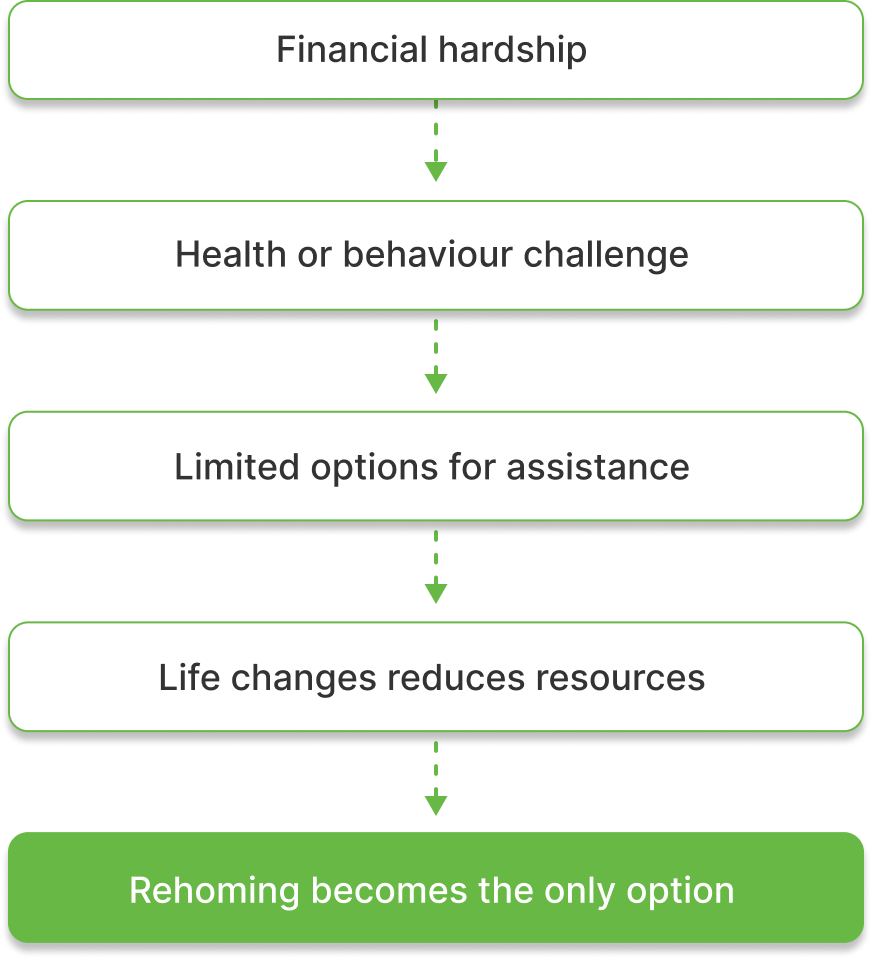
While these factors are generally examined through the lens of pet relinquishment, as data from relinquishing owners is reliably accessible, these same factors, specifically low accessibility to vet care and desexing services, contribute to similar patterns of intake for stray pets. The majority of unclaimed stray dogs and cats are taken into municipal care from low income communities. These patterns reflect broader community-level disadvantage rather than individual owner behaviour.

Jump to specific insights from the report:
Images: Canva, unless captioned otherwise.