


 Cats, Community and Reduced Fees: Inside Mornington Peninsula's May Adoption Event
Read more
Cats, Community and Reduced Fees: Inside Mornington Peninsula's May Adoption Event
Read more

The science behind first impressions
When you’re scrolling through cat adoption profiles online, it often only takes a moment to feel drawn to one over another.

But what actually shapes that first reaction?
New research conducted by the La Trobe University Anthrozoology Research Group (ARG) in collaboration with PetRescue, explores how specific facial features in cat photos, such as coat colour, eye shape and pupil size, influence perceptions of adoptability, cuteness and personality, and what this means for pets waiting for homes.
The findings are published in The Influence of Cat Coat Colour, Eye Shape, and Pupil Size on Ratings of Adoptability Based on a Standardised Online Image, in an Australian Sample.
We spoke with the researchers behind the study to learn more about what they found and what it means for cats looking for homes.

Meet the researchers
Sarah Whelan, an Honours student at La Trobe University, is a lifelong cat lover with a background in psychology. She saw this project as an opportunity to help cats while better understanding how quickly people form impressions from images alone.
“The main question that we wanted to answer with this study was ‘how can we improve cat adoption outcomes based primarily on images included in online profiles?’”
Dr Tiffani Howell is a Senior Research Fellow at La Trobe University, with more than 15 years of experience in human-animal relationship research. Her work focuses on how people form attachments to their pets and how these relationships influence the way we connect with them.
“Anything we can do to improve outcomes for shelter animals is always worth paying attention to.”
We don’t just see cats, we interpret them
A key finding from the research is that people are not simply reacting to appearance; they are forming judgments about personality. Across the study, participants consistently assigned traits such as friendliness, shyness and playfulness based only on a single image.
Most adoption journeys start with a photo, not a description, and while written profiles are important, images are often what people respond to first. Sarah explains that these photos are processed quickly and emotionally, shaping immediate impressions and even influencing whether someone feels a connection with a cat before reading anything else. She highlights that this means people begin forming opinions about a pet’s personality and adoptability almost instantly.
“People's initial perception is a powerful tool.”
Studying cat images
To explore this, Sarah and her supervisory team used a single cat image and created 36 variations by changing three key features that influence how people respond to faces:
- coat colour
- eye shape
- pupil size
Each participant saw only one image and rated it on a range of traits including adoptability, cuteness, friendliness, shyness, playfulness, activity level, trainability, tolerance and perceived difficulty.
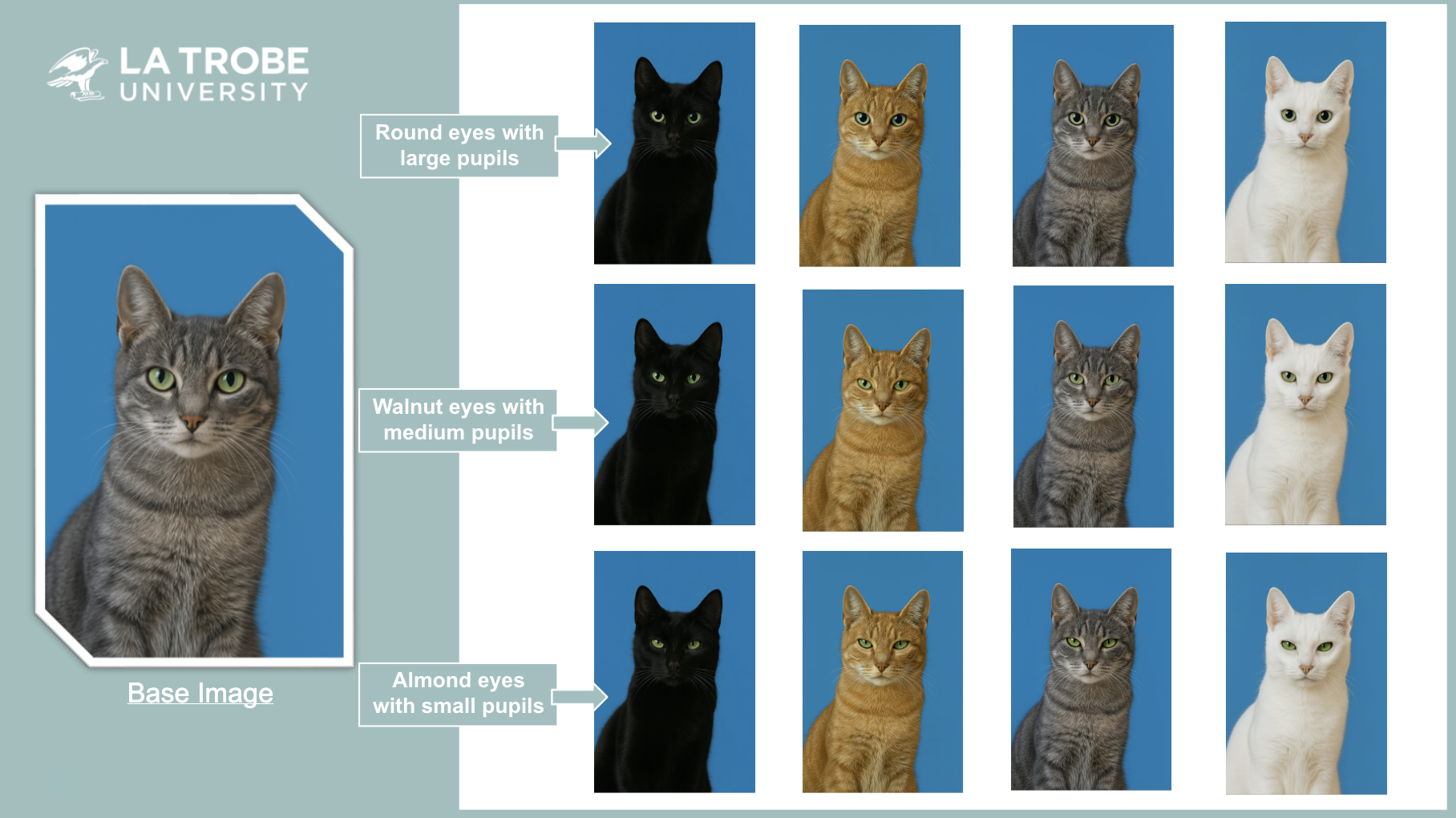
Because each person only saw one image, the study captured immediate first impressions rather than comparisons between cats.
The study included 624 participants aged 18 to 86, with most being current cat owners.
More technical detail is available in the Materials and Methods section of the paper.
Cuteness is key
One of the clearest findings is that cuteness plays a central role in how adoptable a cat appears.
Tiffani explains the psychology behind this:
“There’s a lot of research out there on ‘baby schema’. These are the cute features that human babies have, which adult humans find very appealing. It makes us want to care for them. These features include a round face, big eyes, and a button nose.”
These features extend beyond humans and into how people respond to cats. Cuter-looking cats were more likely to be seen as adoptable, as well as more friendly and approachable, showing how strongly visual features can shape personality judgments even without interaction.
Eye shape influences first impressions
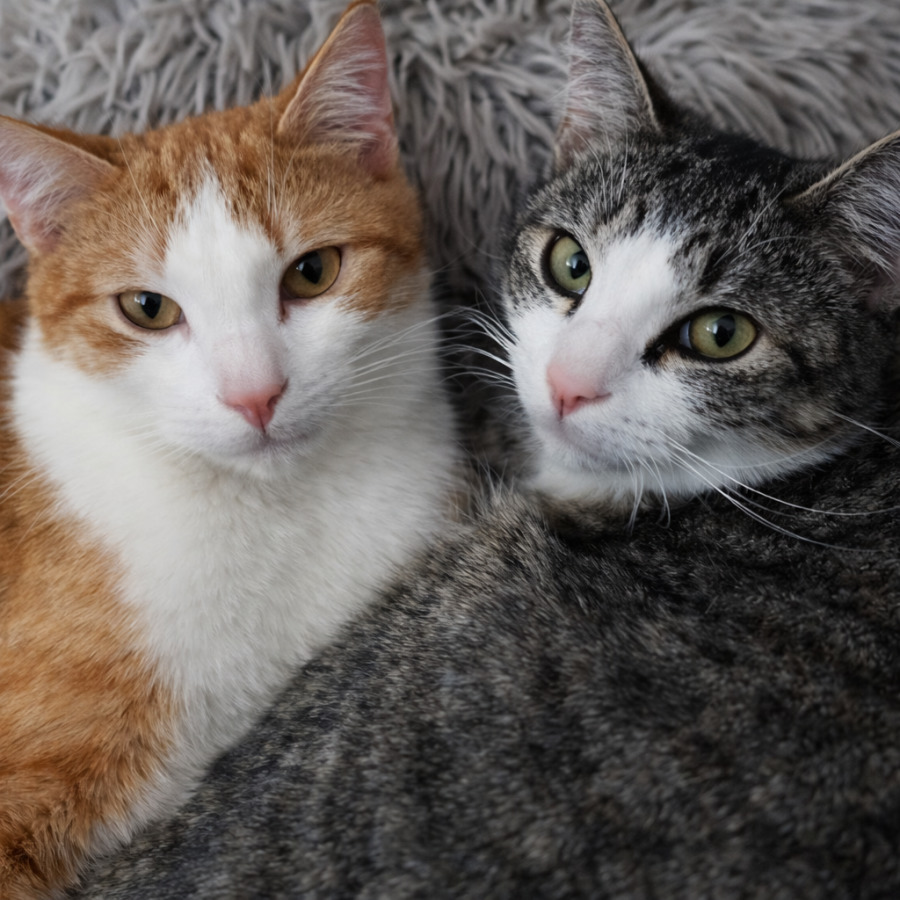
The study found that eye shape plays an important role in how cats are perceived. Cats with round eyes were generally rated as cuter, friendly and adoptable, while almond-shaped eyes received lower ratings.
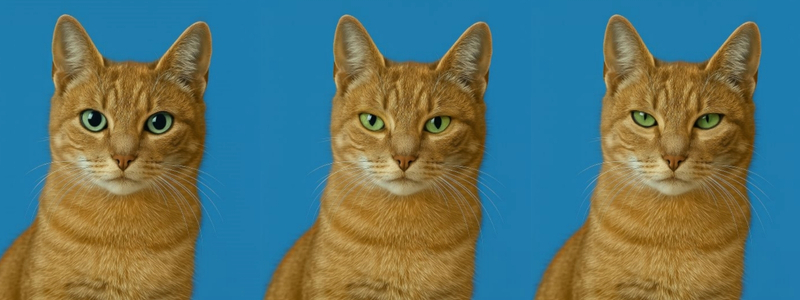
From L to R: round eyes, walnut eyes, almond eyes
Not all visual features had an impact. Pupil size showed no meaningful effect on adoptability or personality ratings, suggesting that people respond more strongly to overall facial structure and expression than to smaller details.
The findings also highlight that perception is not driven by single features alone. Instead, combinations matter, with certain pairings of coat colour and eye shape creating stronger impressions than any one feature in isolation.
Together, these results show how quickly people interpret visual information, forming judgments about personality and adoptability from a single image.
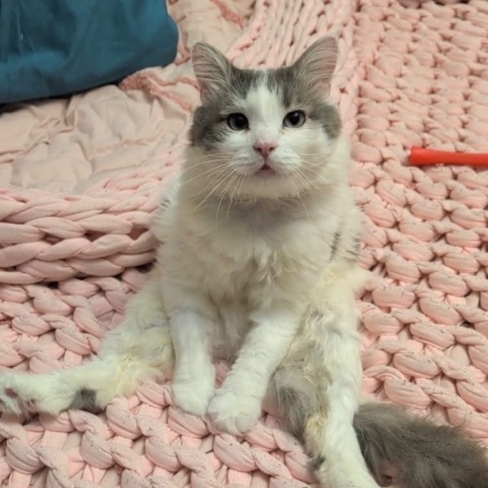
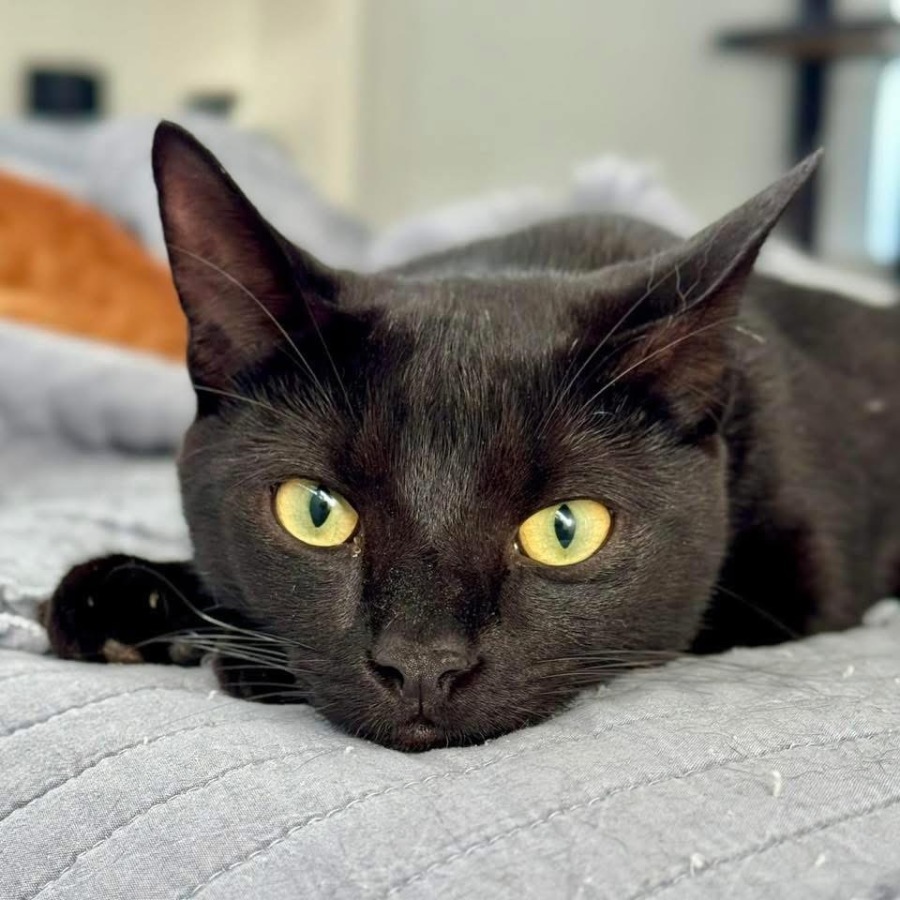
You can explore the full research findings in the Results section of the paper.
A surprising finding about black cats
One of the most unexpected results involved coat colour.
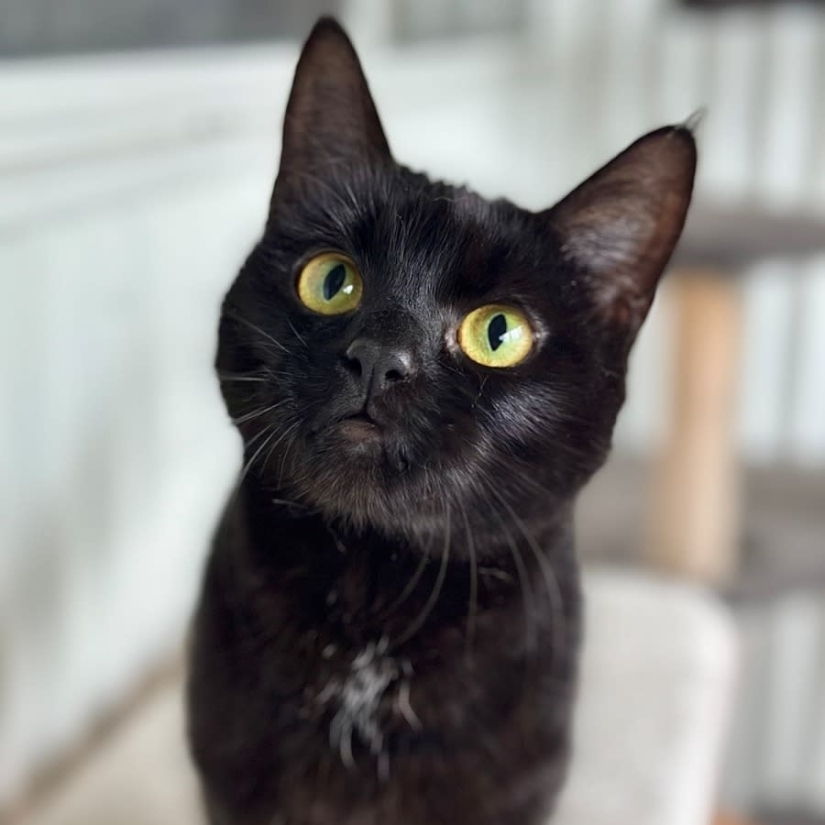
Both Sarah and Tiffani noted that black cats were rated as more adoptable and attractive than expected, particularly given previous research suggesting bias against them.
Sarah says:
“The finding which surprised us the most was about black cats being considered more adoptable and attractive compared to the other cats.”
Tiffani agrees:
“I was surprised by the finding that black cats are considered attractive and adoptable, especially given research on black dog syndrome and black cat bias.”
This raises an interesting question about whether the audience surveyed, who are already engaged with cat welfare content, may simply be more familiar with and open to black cats than the wider public, or whether other factors are also shaping these perceptions. It is not yet clear what is driving this difference, but it highlights an important opportunity to explore how these findings align with broader research and other data sources.
You can read more about black cat bias and related research here: Bringing black cats out of the shadows and into loving homes.
What this means for pet profile photos
For Sarah, the findings have clear practical value for shelters and rescue groups.
“From our research, it shows that to make cats look more appealing in photos is to make sure the photos are clear and crisp, and make sure that these photos also focus on highlighting the behavioural characteristics of cuteness and friendliness.”
She also highlights how framing matters:
“The eyes of the cat should be highlighted if the cat's eye shape is round, whereas the photos should focus less on the eyes if the cat's eye shape is almond.”
The good news from Sarah and Tiffani’s research is that small changes in photos can make a real difference in how cats are perceived online.
That doesn’t mean changing who a cat is. It means helping their personality shine through clearly in a photo.
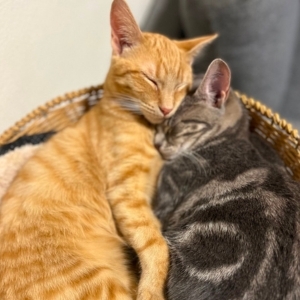
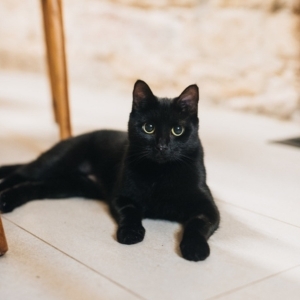
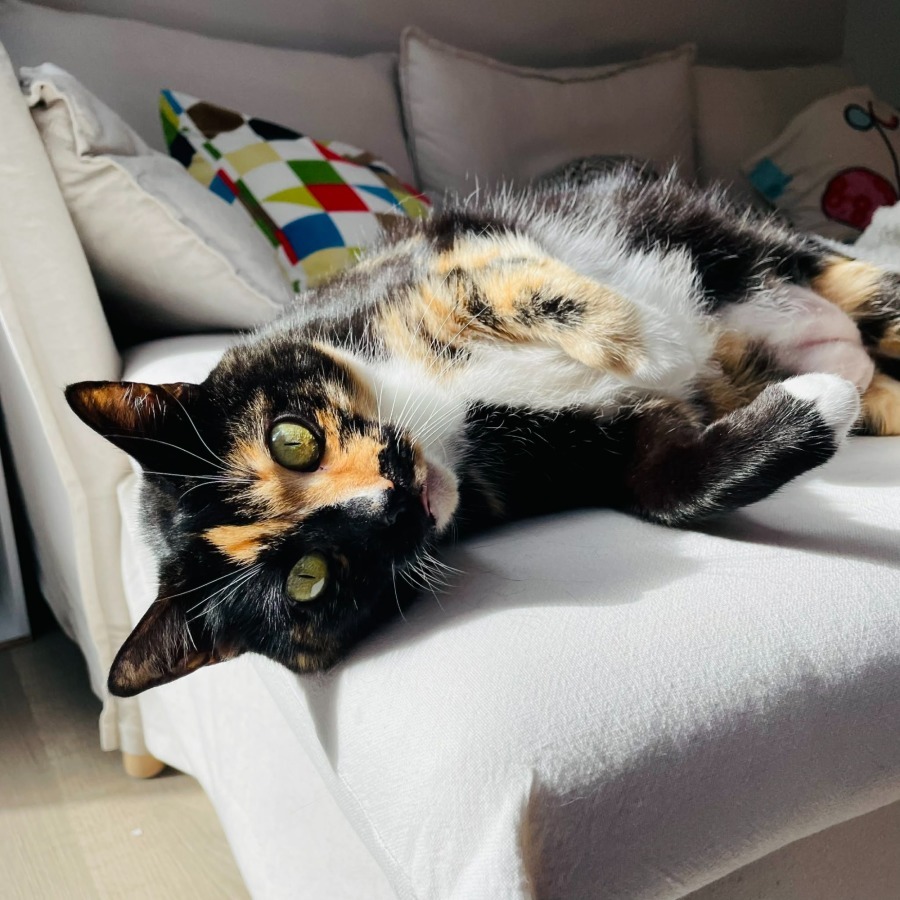
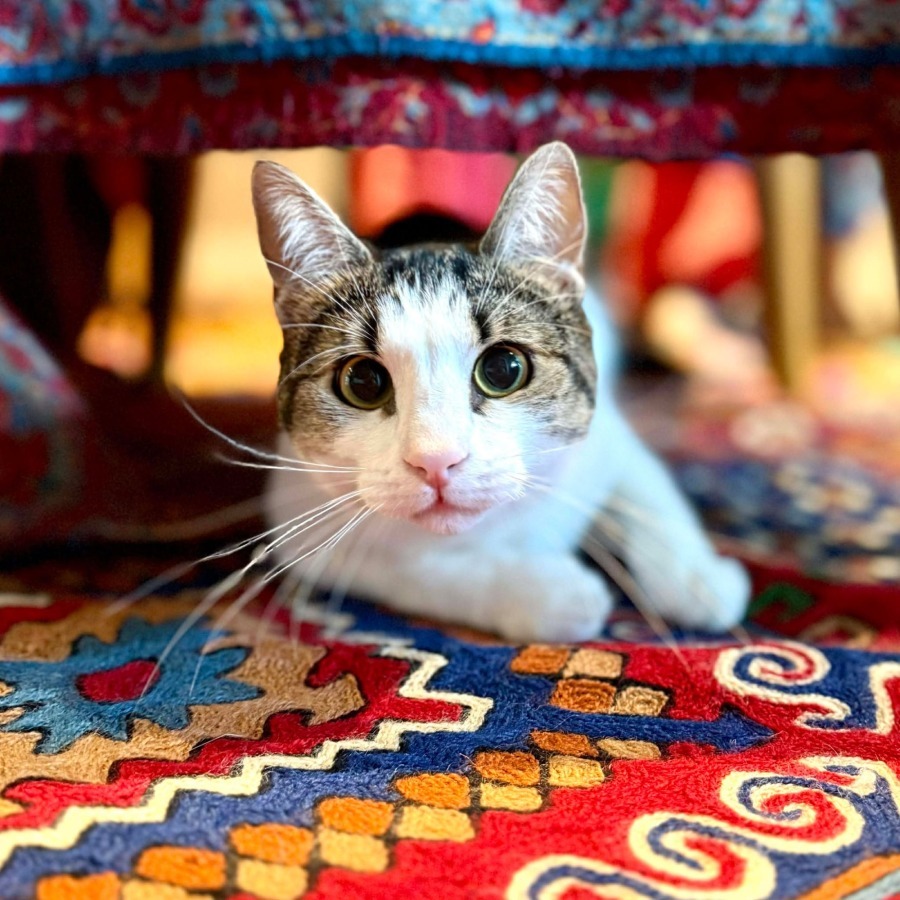
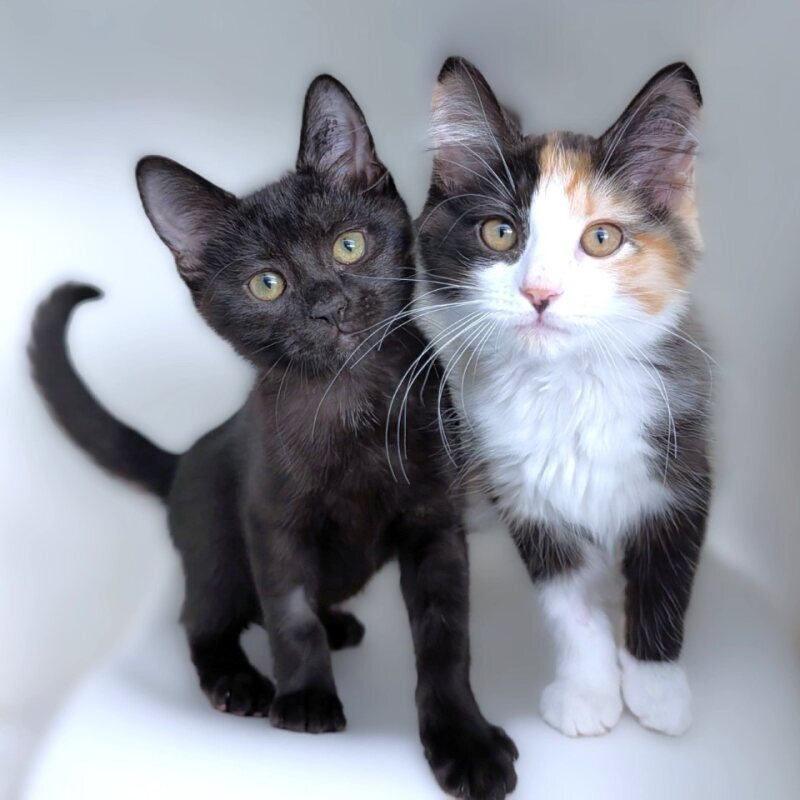
Based on the findings, along with practical advice from experienced rescue pet photographers, here are some simple tips to improve adoption photos:
- Use natural light to help cats’ faces and expressions stand out.
- Focus on the eyes so adopters can connect with the cat.
- Get down to the cat’s level instead of taking photos from above.
- Keep backgrounds clean and uncluttered.
- Use backgrounds that contrast with the cat’s coat colour.
- Capture playful, curious, and affectionate moments.
- Use toys to help grab the cat’s attention.
- Include both close-up photos and action shots.
- Highlight the cat’s unique features and personality.
- Wipe your camera lens before taking photos to keep images clear.
For more detailed photography tips and inspiration,
🐈⬛ Shining the light on black cats: photography tips
📸 Top tips for taking purrrfect cat pics
If you’d like to go one step further, there are also simple tools that can help improve photo backgrounds without changing the cat itself. We’ve put together a guide on how AI can be used safely and effectively to clean up pet photos and help pets stand out online.
💻 How to change backgrounds on pet photos using AI (and how it helps pets get seen)
As this research shows, people are making decisions within seconds. A photo that feels warm, clear and true to the cat can help that first impression land in the right way.
And that first impression might be the one that leads them home.
Need help writing cat profiles? Here’s something we prepared earlier!
✍️ How to write a great pet profile


