


 Sharing skills to make desexing more accessible for cats
Read more
Sharing skills to make desexing more accessible for cats
Read more

What happens when someone doesn’t get the pet they applied for?
When there are thousands of pets in need of homes across Australia, it makes sense to focus on the happy tail of pet adoption: someone finds a pet on PetRescue > submits an enquiry > meets them > adopts and brings them home.
But several people might be interested in adopting a pet, and yet a pet can only go with one home. Many adoption journeys don’t end that way.
One pet can attract dozens, sometimes hundreds, of enquiries. But only one person can ultimately adopt them.
So what happens to everyone else?
And what does that have to do with User Experience (UX) Design?
Quite a lot.
PetRescue runs Australia’s largest and most trusted pet adoption platform, connecting millions of people looking to adopt with rescue organisations and pets in need of loving homes. Creating a good experience isn't just about helping someone find a pet. It's also about what happens before, during and after someone submits an enquiry, particularly when the outcome might not be what they hoped for.
That's what PetRescue CEO and Managing Director, Patima Tantiprasut, was invited to share more about at UX Australia 2026, a leading Australian conference for UX, product and service design held in Sydney in August 2026.
In her presentation, Designing for Disappointment, Patima challenged the idea that digital experiences should only be designed primarily for successful outcomes.
At PetRescue, a successful outcome for one person can mean disappointment for many others. A single pet can attract many enquiries, but only one household can ultimately take them home. That means there can be many people experiencing disappointment for every happy tail we hear about.
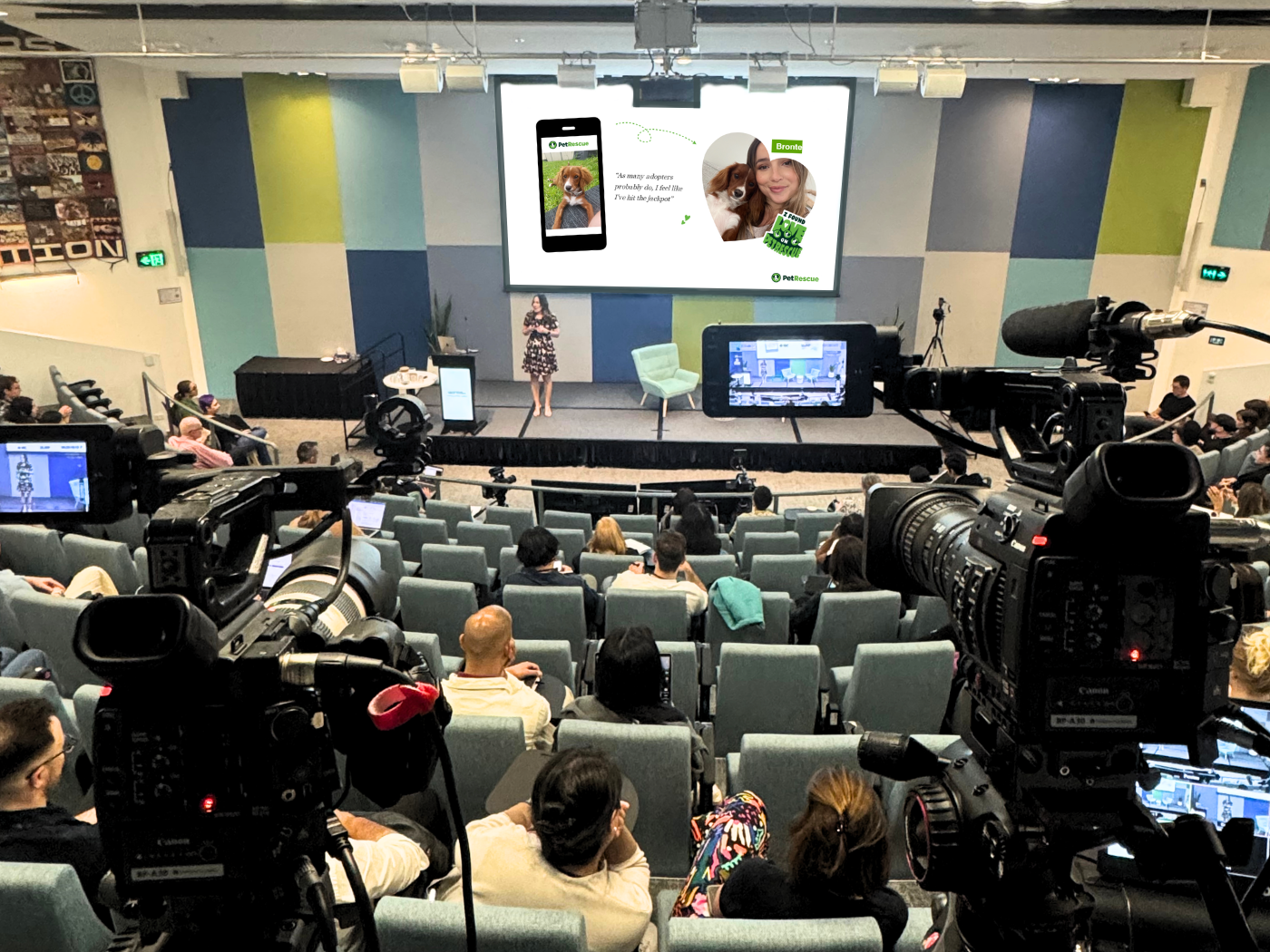
Rather than designing only for the person who successfully adopts the pet, Patima explored how PetRescue could also design for the people who weren’t successful. The steps included helping set expectations early, creating progress visibility with regular communication touchpoints and helping them navigate the feelings of disappointment to hopefully keep them encouraged to continue their journey.

The other side of adoption
PetRescue has helped connect more than one million pets, and changed social perceptions of rescue pets by reducing stigma and building interest for pet adoption in Australia. But that success can also mask the less visible side of the adoption journey: what happens when the data reveals that demand for certain pets becomes greater than intended.
Sometimes solving a problem creates the next problem.
By helping more people discover and fall in love with rescue pets, PetRescue was doing exactly what it had set out to do. But increased interest could also mean more people experiencing disappointment when they couldn't adopt the pet they had hoped for.
Patima recapped the catalyst moment:
“In 2018, our focus was helping to get pets seen and adopted. Yet a large adoption event that had the potential to have completely cleared the shelters in one swoop uncovered results that we weren't expecting.
This became the catalyst for us looking closer, and with a deeply compassionate and empathetic lens for everyone involved. There were two different perspectives in the complaints that would be received, and the project became the chance to bridge the gaps in these voices.”
By 2018, PetRescue had been part of generating the interest in rescue pets that the mission had always set out to create to help find a home for every pet, but it also exposed a structural problem. Popular pets could attract dozens, sometimes hundreds, of applications, while practically, each pet could only go to one home.
The project had three goals:
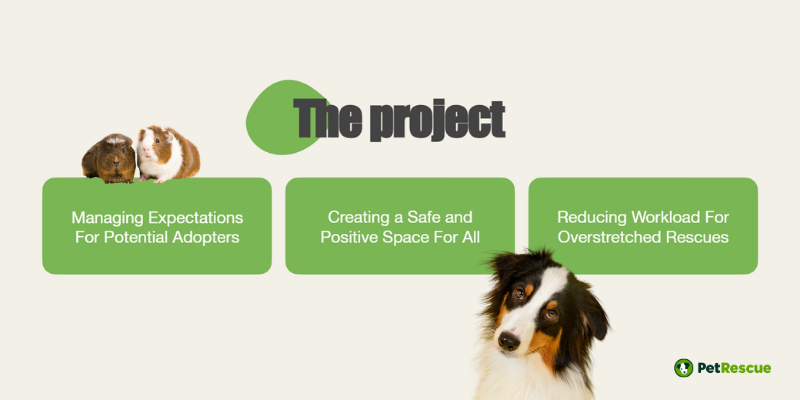
- Managing expectations for potential adopters
- Creating a safe and positive space for all
- Reducing workload for overstretched rescue organisations.
Whether the person was successful or not, their emotional investment journey was still, in most ways, identical up to the point of submitting an enquiry for a pet.
And that’s where the experience after an enquiry becomes just as important as the experience that came before it.
Designing for the whole experience
People don’t remember every part of an experience equally. We tend to remember the emotional high point and how the experience ends.
This is known as the Peak-End Rule, and it helps explain why what happens after someone misses out matters.
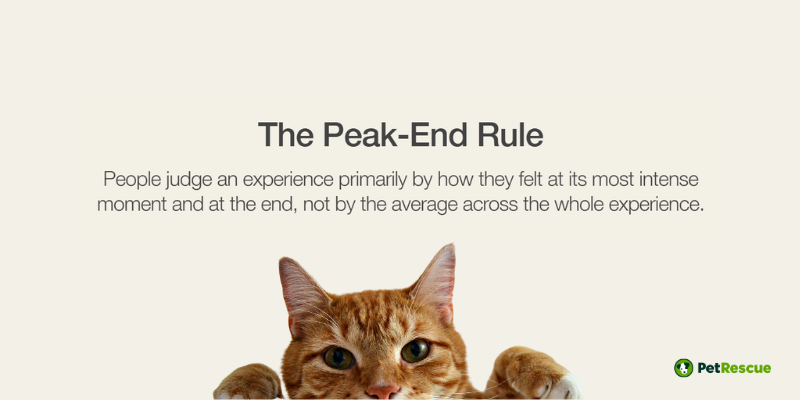
In pet adoption, that final experience can influence what happens next.
Will they keep trying to adopt? Will they stay connected to PetRescue? Or will a series of disappointing experiences send them somewhere else?
This is where adoption is fundamentally different from e-commerce patterns.
If someone misses out on a product, they can simply look elsewhere and buy it. But when someone misses out on a pet, they are deeply invested. They may have imagined that pet becoming part of their family and may still be ready and willing to welcome a pet into their home.
As Patima described it,
“When you imagine yourself as the type who values doing good - the type of person who would do the right thing - the type of person who would adopt a pet, we’re looking at a deeply personal identity experience. Once someone is ready for a pet, that desire doesn’t just disappear. If people have multiple bad experiences trying to adopt, they will simply find other avenues and might feel resentful in the process.”
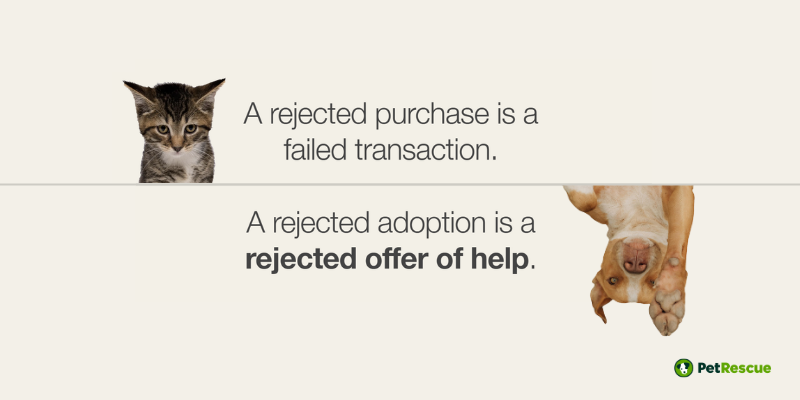
A rejected purchase is a failed transaction. But a rejected adoption is a rejected offer of help.
An adoption enquiry isn't simply an attempt to obtain something.
A person may feel that they are offering their home and their help to a pet in need. When that offer is rejected, it can affect how they feel about the experience and influence what they do next.
They may still want a pet, but repeated negative experiences can push people towards other ways of finding one. Instead of returning to PetRescue, they may turn to backyard breeders or other sources that don’t have the same safeguards.
That shift in pathway is the unintended consequence PetRescue was trying to reduce with the project, and the evidence was clear in the complaints received and negative public sentiment from unsuccessful adopters.
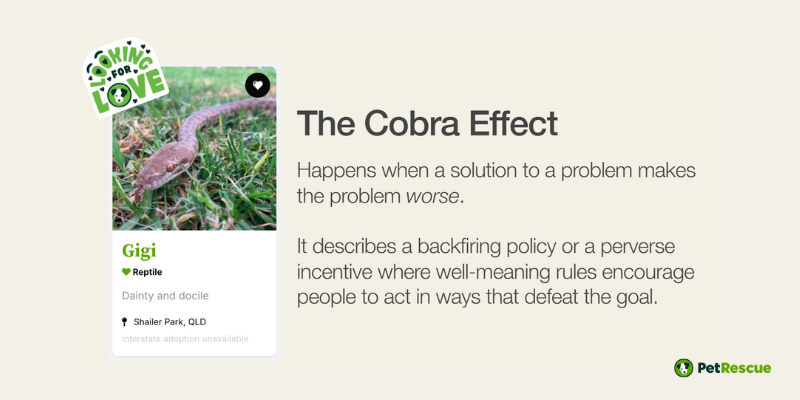
The Cobra Effect describes what happens when an attempt to solve a problem ends up making the problem worse. In this case, a process intended to create interest for rescue pets and encourage people to adopt could inadvertently push people who had already decided to adopt towards other ways of acquiring a pet.
The aim was to reduce this side effect and help people stay connected to adoption.
But potential adopters weren't the only people whose experience needed to be considered. Rescue volunteers were balancing animal care, urgent decisions and large volumes of enquiries, often with limited time and resources.
Designing for everyone
But potential adopters weren’t the only people whose experience needed to be considered.
Rescue volunteers were balancing animal care, urgent decisions and large volumes of enquiries, often with limited time and resources.
The challenge was to improve the experience for potential adopters without creating more work for already overstretched rescue organisations.
In other words, this wasn’t simply about designing a better experience for one group of users.
It was about designing within a system where the experience of one group could directly affect another.
A better adoption experience had to work for three groups:
- People looking to adopt: More clarity, communication and support.
- Rescue organisations: Less repetitive work and safer, more manageable communication.
- Pets: A better chance of being matched with the right home and ultimately adopted.
With this in mind, PetRescue has introduced a number of changes designed to make the adoption process clearer and more supportive.
These include positive friction to improve the quality of adoption requests, greater visibility of enquiry and adoption status, safer ways to manage communications and report abuse, and making it easier for rescue organisations to close the loop with unsuccessful would-be adopters.
The surge in adoption interest during 2020 put the challenge to the test.
At one point, a single pet received 1,366 enquiries.
One pet.
1,366 people hoping to help.
One possible adoption.
PetRescue introduced modern design patterns, adding valuable extra steps in the process, which in turn provided rescue organisations with more useful information about potential adopters earlier in the journey.
It was an example of positive friction.
Good UX doesn’t always mean less friction.
Sometimes, adding the right amount of friction can create a better experience further along.
The goal wasn’t to make adoption harder.
It was to use small, purposeful moments of friction to improve the quality of information, set better expectations and reduce work later in the process.
Patima also looked at what changed after these improvements were introduced, including reported changes in complaints, conversation safeguards, adopter choice and enquiry volumes. Member rescue feedback suggested that adopter profiles provided more useful information when considering potential matches.
Look beyond the biggest numbers
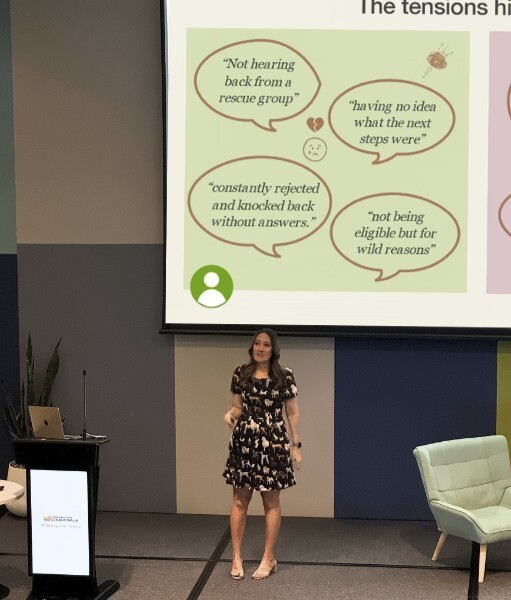
Patima’s presentation also encouraged designers to look beyond the biggest numbers and consider the complete experience - and the metrics that matter.
If PetRescue had only focused on the number of adoptions and enquiries alone, this opportunity to improve the process wouldn’t have emerged.
A better metric doesn’t always mean a better experience.
When we optimise one outcome, it’s worth asking what might be happening elsewhere in the system - and who might be carrying the consequences of that optimisation.
For Tulsa D., the presentation was a reminder that solving a problem can sometimes create a bigger one.
“This was one of my favourite talks at UX Australia 2026, mostly because the premise isn't one I hear often: achieving exactly what you set out to do can inadvertently create a bigger problem. As a designer, it's a great reminder to think forward about what solving a problem might set in motion.
I also appreciated that the solution wasn't a grand re-architecture or modernisation effort. It was a series of small, pragmatic changes rooted in UX fundamentals, with a deep respect for the reality of how local rescues actually operate.
I often see pragmatic design choices mislabelled as unambitious, corner-cutting, or lacking taste, so it was refreshing to see this approach have such a big impact!!”
For Ricky Onsman, Principal Technical Writer for the Knowledge Center at Vispero
“This presentation was a real eye-opener for me. It was a brilliant exposition on considering all aspects of an application process, not just focusing on a successful outcome but also how to mitigate the impact of an unsuccessful outcome.”
For Elba W, the presentation was a reminder of the limitations of metrics:
“A great reminder that improving a metric doesn’t automatically mean improving the experience.”
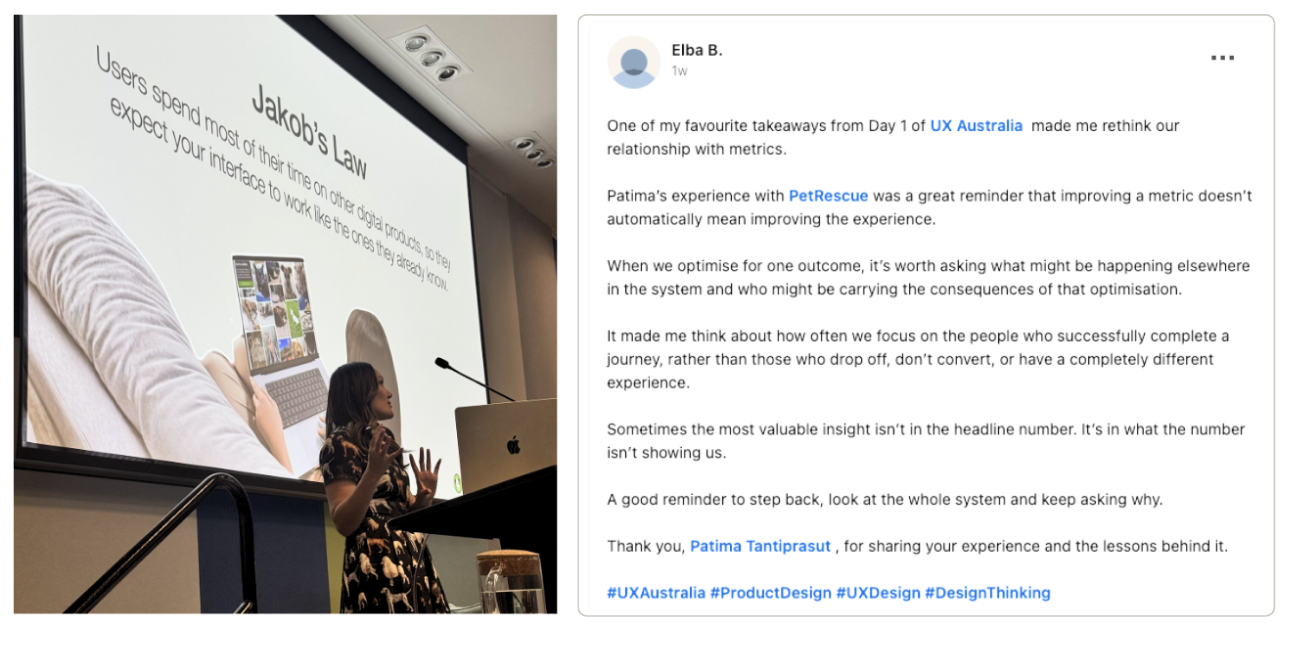
Image: Elba W’s post on LinkedIn
“When we optimise for one outcome, it’s worth asking what might be happening elsewhere in the system and who might be carrying the consequences of that optimisation.”
For Dr Kayla Heffernan, a design and research leader who attended the presentation, the idea resonated with her own experiences of house hunting and designing digital experiences.
“Rejection, whether for a job, a house, a date or a pet, can lead to emotional injury and feelings of judgement, like you're not good enough,” Kayla says.
“There is also a component of grief for the life you had imagined with that new job, house, partner or fur-baby.”
Patima’s conversations after the presentation reflected a range of reflective and resonant experiences, including meeting fellow pet-loving designers who were unsuccessful adopters but also made the choice to keep trying, eventually becoming successful.
When the adoption journey goes to plan
Kayla also knows what it feels like when an adoption journey goes exactly to plan.
Her own PetRescue story began in 2015, when she was looking for a rescue cat. She hadn't planned on adopting another black and white cat, or a kitten, until she saw Aggie's “big puss n' boot eyes”.
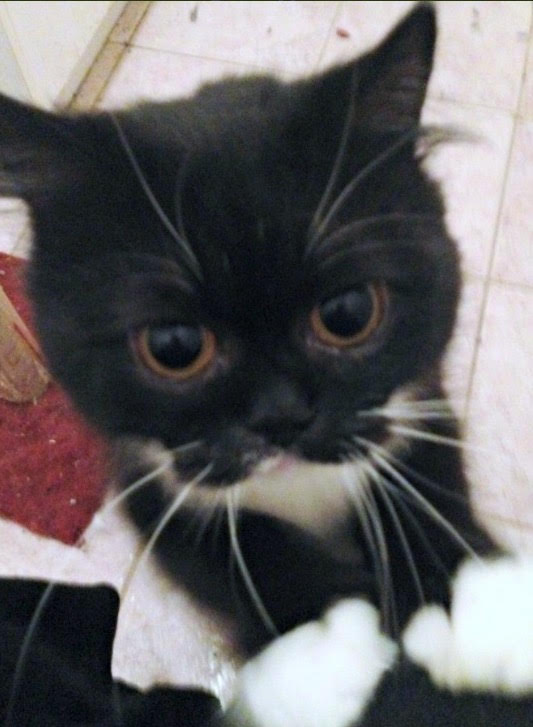
Image: Aggie’s adoption profile photo
“I kept coming back to her listing on PetRescue,” Kayla says.
She enquired, completed the questionnaire and visited Aggie with her foster carer at Paw Prints Private Rescue. Less than a week later, Aggie was home.
Today, Aggie follows Kayla from room to room, watches her in the shower to make sure she doesn't drown, works beside her and snuggles up as she writes.
“She’s still with me and has been my constant companion.”
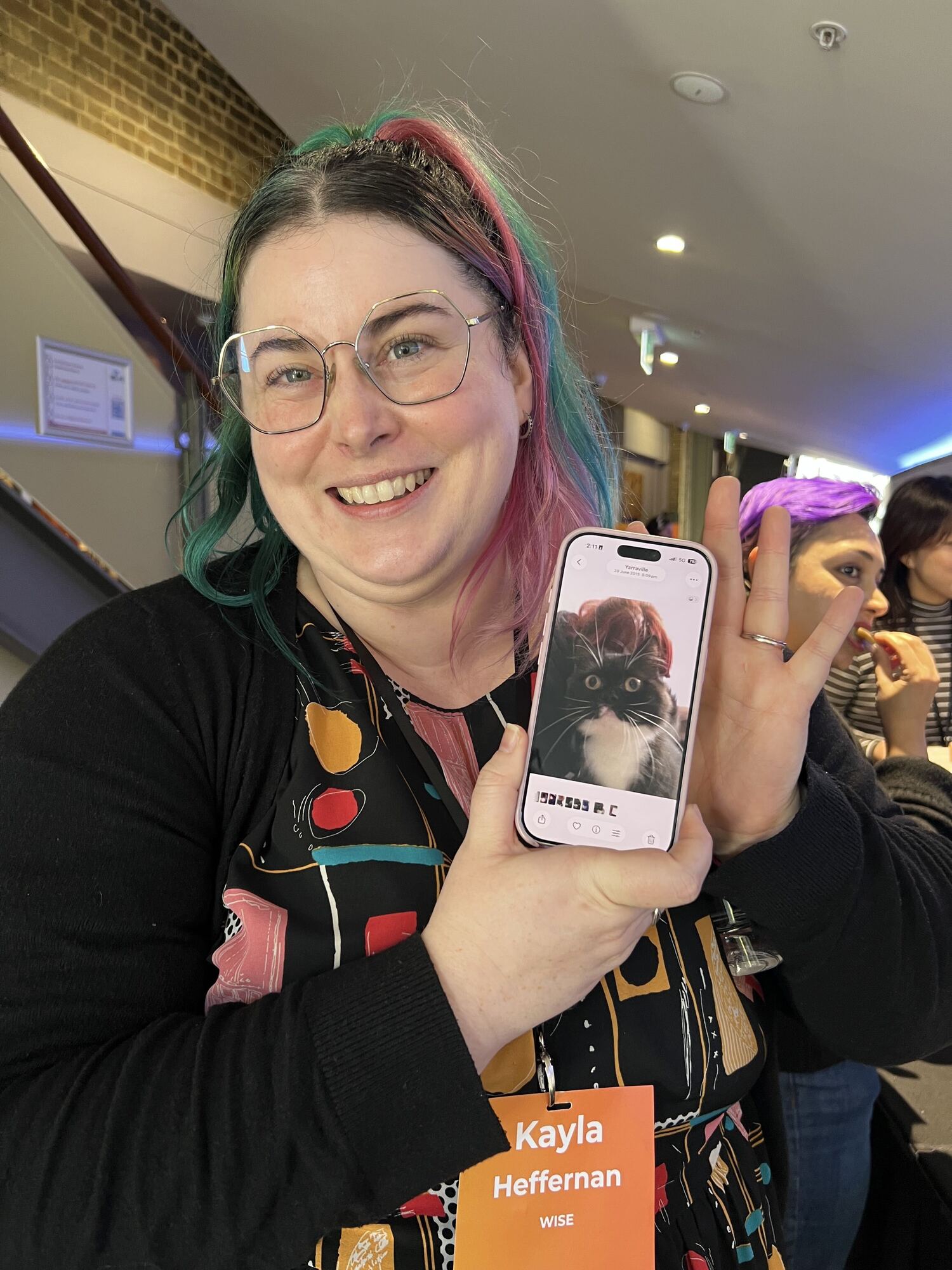
Image: Kayla with a photo of Aggie on her phone
It was a quick and smooth adoption journey, but Kayla says Patima's presentation highlighted how different the experience can be for others.
“While my journey to adopt Aggie was quick and smooth, at UX Australia 2026 I learned from Patima that that isn't the case for everyone. When demand outstrips supply, we need to design for disappointment.”
Designing for what’s next
The project has improved the overall adoption experience, but there is still a long way to go before the problem is completely solved.
As adoption rates slow, new challenges emerge for both the rescue community and potential adopters. The post-application journey becomes even more crucial.
The pets most negatively impacted won’t necessarily be the ones already attracting hundreds of enquiries. They may be the less popular pets, the ones who can be overlooked while attention is concentrated elsewhere.
For PetRescue, that means continuing to look beyond the biggest numbers and designing intentionally for the pets who need these life-saving solutions the most.
Creating a better adoption experience is about helping people find the right pet while simultaneously making sure the pets who are hardest to home still have a chance to be seen, adopted and loved.
Because the best adoption experience isn’t simply the one that ends in an adoption.
It’s the one that keeps people connected to adoption, even when the answer this time is no.


