


New PetRescue research reveals the pressures shaping Australia’s companion animal rescue and shelter sector, and five priorities that could help create a more sustainable future.
Behind every pet who finds their way to a new home is a network of people and organisations making it possible.
Shelters. Rescue groups. Councils. Foster carers. Volunteers. Veterinary teams. Transporters. Adoption teams. Donors and supporters.
Together, they form a vital part of Australia’s companion animal welfare system. But new PetRescue research shows that system is under sustained pressure.
Demand for services has remained at a multi-year high. Funding has not kept pace. Much of the work relies on unpaid volunteers, while the sector faces a rapidly ageing workforce and declining representation of people under 45.
A Tail of Two Systems: Moving Australia’s Rescue Sector from Strain to Sustainability looks at where the greatest pressures sit, why they are happening, and what could help create a stronger and more sustainable sector.
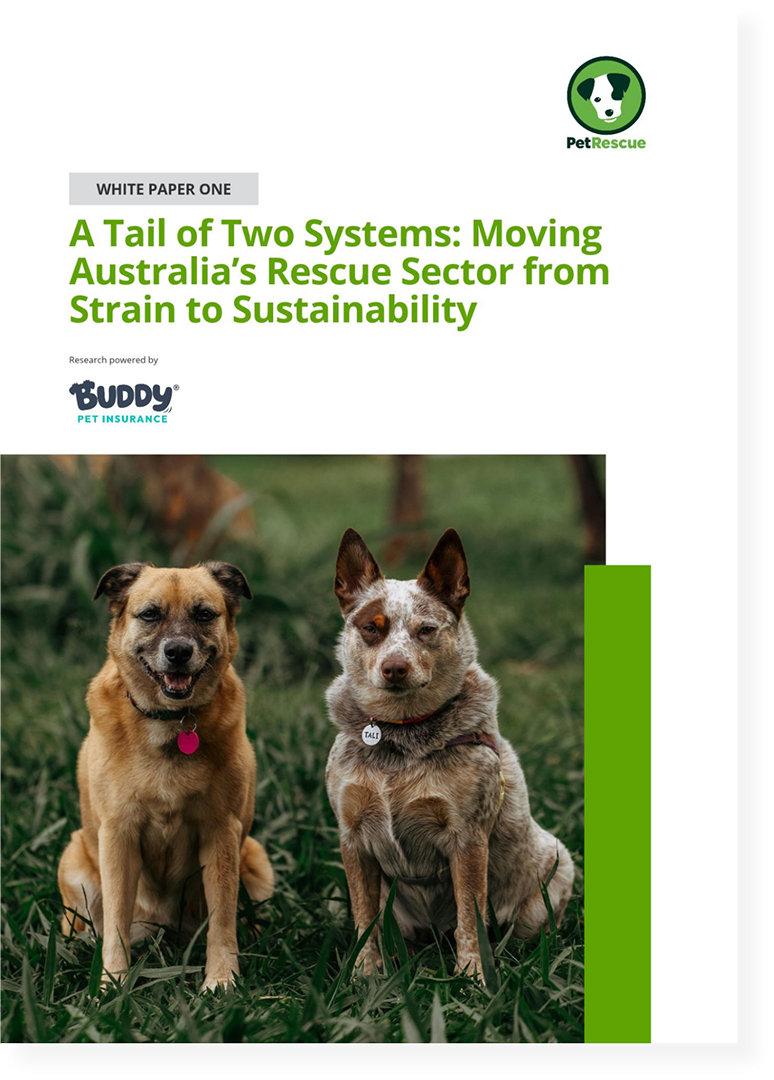
View here or download the white paper
About the research
This is the first of four white papers in PetRescue's research series, examining the challenges and opportunities shaping Australia's companion animal welfare sector.
The research draws on multiple PetRescue datasets collected between 2021 and 2026. Its primary dataset is the 2026 State of Pet Adoption Sector Survey, which gathered 146 responses from 134 unique organisations across Australia's companion animal rescue and sheltering sector. Earlier survey data, qualitative interviews and national and international research were also used to identify and interpret trends.
The findings reflect respondents' experiences and perceptions and should not be interpreted as objective measures of every Australian rescue or shelter organisation.
Want to dig deeper?
Download A Tail of Two Systems to explore the five whole-of-sector priorities and recommendations.
For the complete findings, methodology and detailed guidance for individual organisations, read The Cost of Care: Sustainability Challenges in Australia's Rescue Sector.
Explore the PetRescue x Buddy Pet Insurance research hub


This research is supported by Buddy Pet Insurance through the Buddy Giving Program as part of a series of four white papers exploring key challenges facing animal welfare in Australia.

What are the biggest challenges facing animal rescue organisations in Australia?
PetRescue's research identifies interconnected pressures including funding stress, workforce sustainability, capacity strain, organisational isolation, adoption barriers and rising demand for support. The findings suggest these pressures are not distributed evenly across the sector, with some organisational types experiencing significantly greater strain than others.
How is animal rescue funded in Australia?
Funding models vary significantly between organisation types. PetRescue's research found adoption fees were the most commonly reported income source at 63%, while grant funding as an income source ranged from 18% to 55% depending on organisation type.
Why are volunteer-run animal rescues important?
Volunteer-run rescues provide a significant pathway into care and adoption. PetRescue platform data shows that almost 32% of cats listed for adoption on PetRescue in 2025 had entered rescue care either directly from the community or through transfer from a council or shelter.
What could make Australia's animal rescue sector more sustainable?
The white paper identifies five priorities: improving funding models, building a shared Australian economic case for prevention, addressing upstream drivers of animal intake, targeting support towards high-strain organisations, and rebuilding and broadening the sector's workforce pipeline.