


Adoption information
I've been adopted!
About Jed
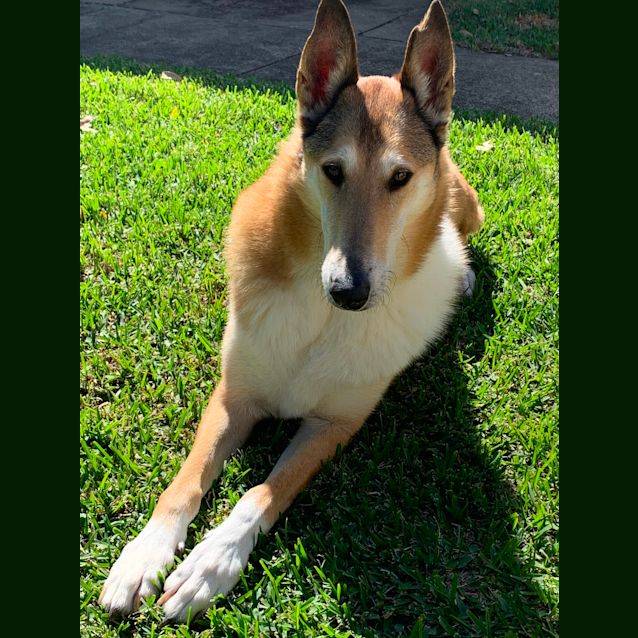
My name is Jed and I would love to be part of a home with someone who I can keep company every day. I'm good with kids, cats and small animals. I also get along with other dogs if they are friendly. I don't like the bossy ones though, they scare me a bit. I've been used to running around a large property, but I have lived in town too, so will adapt to both worlds easily. I am a young 8 years old. I'm not very good with traveling, so would like to be rehomed in NSW. I'm sure if you would like me to travel later on then this can be remedied easily with a bit of training, time and patience.
If you are interested in adopting Jed please complete our questionnaire at the link below.
http://www.victoriancollierescue.com/adoption-questionnaire.asp
Medical notes
Some dog breeds are more sensitive to certain drugs than other breeds. Collies and related breeds, for instance, can have adverse reactions to drugs such as ivermectin and loperamide (Imodium).
Drug sensitivities result from a mutation in the multi-drug resistance gene (MDR1). This gene encodes a protein, P-glycoprotein that is responsible for pumping many drugs and other toxins out of the brain. Dogs with the mutant gene cannot pump some drugs out of the brain as a normal dog would, which may result in abnormal neurologic signs. The result may be an illness requiring an extended hospital stay - or even death.
Approximately three of every four Collies in the United States have the mutant MDR1 gene. The frequency is about the same in France and Australia, so it is likely that most Collies worldwide have the mutation.
Many different drugs and drug classes have been reported to cause problems in Collies and other herding breed dogs that carry the MDR1 mutation. We suggest that you link to the Washington State University web site which has a list of drugs that have been researched because information on these drugs changes often.
The most common drugs known to cause neurological signs are listed below. We suggest that these drugs be avoided completely unless you are absolutely sure the amount to be administered is in the "safe" dosage zone.
- Invermectin (antiparasitic agent).
- Acepromazine (tranquilizer and pre-anesthetic agent).
- Butorphanol (analgesic and pre-anesthetic agent).
- Erythromycin
- Loperamide
- Selamectin, milbemycin, and moxidectin (antaparasitic agents).
- Vincristine, Vinblastine, Doxorubicin (chemotherapy agents).
Adoption details
Our Rescue Collies are placed into foster care in one of our volunteers private homes. There they are assessed for temperament, health, level of training, the Collies likes and dislikes and what type of home would best suit the Collie.
If not already done, the Collie is desexed, vaccinated, wormed, heartworm tested & microchipped.
The Collie will not be put up for adoption until we (and the foster carer) feel the Collie is ready to go to a new home.
Once the collie has been put up for adoption we will then choose a number of suitable applications for the foster carer to go through and decide which applicant they think would suit the collie best. The foster carer will then arrange for the collie to meet and greet their potential new adopter at a home check and observe how the collie and the adopter interact with each other. After the meet and greet the collie goes home with the foster carer for a cooling off period so that the applicant and the foster carer can both have a serious think about whether this is the right home for this particular collie.
If it is decided that this is the right forever home then the applicant is advised to collect the dog from the foster carers, we believe this stops the dogs from feeling dumped, the paperwork is completed, and the collie goes off to its new forever home!
This pet has been adopted and found love with its new family.