


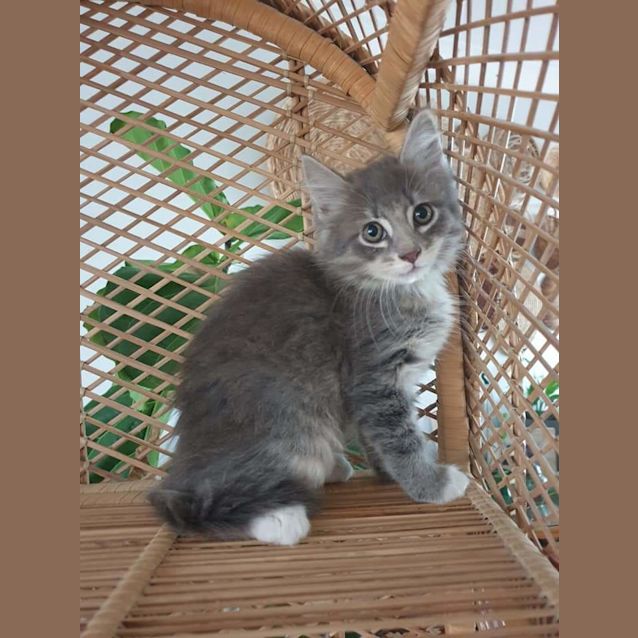
Adoption information
I've been adopted!
About Hickory
Hickory is an absolute joy and delight to be around.
She is a curious floof that loves to explore play and interact with anyone who will give her attention. In fact she demands it!
She enjoys eating, cuddles on the lounge and meowing the house down. She is great with all types of people and would suit most homes.
She came in off the streets with her 5 siblings and was exposed to calicivirus and therefore is a carrier of the virus. She is an amazing kitten though and has come strength to strength in her personality and it shows in her ability to vocally express her displeasure at her food bowl being empty or her need for cuddles.
However, she is a regular kitten and in great health. See vet notes for more info.
Only apply of you intend of having Hickory strictly 100% indoors
Please note that Hickory like all her siblings have Calici virus.
He would be suitable to a home that is familiar with the virus and either have no other cats, with her siblings or a cat that also has calici.
Maintaining overall health and up to date vaccinations are a must. Please see vet notes for calici information.
Medical notes
Fully vetted at adoption and asymptomatic to calicivirus. They do not have active symptoms and some of the litter had no symptoms at all but were exposed to the virus therefore considered carriers.
Feline calicivirus is a virus that if untreated causes upper respiratory infections and oral disease in cats. This virus infects cats throughout the world and can cause disease in both domestic and exotic cat species. Although several different viruses and bacteria can cause respiratory disease in cats, calicivirus is one of the more common infectious agents isolated in cats with a respiratory infection.
The typical clinical signs of an upper respiratory infection involve the nose and throat such as sneezing, nasal congestion, conjunctivitis (inflammation of the membranes lining the eyelids), and discharge from the nose or eyes. The discharge may be clear or may become yellow/green in color. In addition to these typical symptoms, cats with a calicivirus infection often develop ulcers on the tongue, hard palate, gums, lips, or nose. These cats will usually salivate or drool excessively as the ulcers are very painful.
Calicivirus is highly contagious and infected cats can shed the virus in saliva or secretions from the nose or eyes. If an infected cat sneezes, airborne viral particles can be sprayed several meters through the air.
Most cats with an uncomplicated calicivirus infection can be treated symptomatically at home. Your veterinarian may prescribe an eye medication to be applied topically if your cat has a purulent (green/yellow) eye discharge. Although viral infections do not respond to antibacterial drugs, broad spectrum antibacterial drugs.
Our kittens have received all their treatment and are now considered carriers of the virus. They may flar up with flu like symptoms at times of stress.
Calicivirus is very species specific and does not represent any risk to people or other species of animals.
Adoption details
Please email us for an adoption questionnaire and return it completed with photos of where the kitten will eat or sleep.
Please also address the what will you do when you go on holiday question as boarding may not be an option for these kittens.
Two week trial occurs with payment if successful.
This pet has been adopted and found love with its new family.