









Adoption information
I've been adopted!
About Meeko
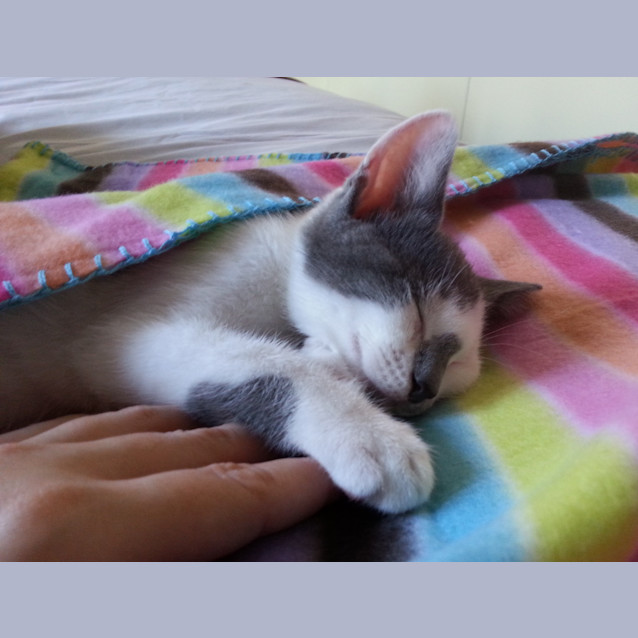
Meeko has been in foster care for a few months now after having feline CaliciVirus. He has now recovered and is finally ready to find is furever home! Meeko is a boisterous and attention seeking little boy. He loves to play with his toys and with EVERYONE he meets but shortly after he'll be asleep in your arms. Meeko's favourite things include sleeping on the bed with someone playing with toy mice and watching tv!Meeko is very playful so he needs toys and attention. He also gets lonely very easily. Meeko can be a little overzealous at times when playing so he may not be suitable for a home with young children. Meeko would be an ideal pet for a home that has other pets he can play with he loves dogs and isn't easily frightened. Meeko is very loving and attentive his greatest desire is to be with you!Meeko has been treated for Feline CaliciVirus since his arrival at the Shelter. His foster carer has worked very hard to ensure he remains happy and healthy during this time. As a result of this virus he must be housed seperately from the other felines at the Shelter. If you would like to meet Meeko please just ask our friendly staff to arrange a meeting!Never heard of CaliciVirus? Here's some info...This is a cat that has (or has been exposed to) Feline CaliciVirus (FCV). This disease usually causes signs in cats consistent with upper respiratory disease and/or signs associated with anorexia (loss of appetite) caused by ulcers. Some other signs are associated with fever such as lameness and/or stiffness. Young immune-compromised and stressed cats are most likely to show clinical signs. FCV is highly contagious to other felines and can be spread via direct contact with actively infected cats for more than 30 days and sometimes up to 2 months after recovery. Some cats can shed it for life. These cats are known as carrier cats and can be a source of infection to other cats. FCV can also be spread by fomites most commonly people/clothes as well as in droplets from sneezing cats (less than 3 metres away). Cats most at risk of developing more serious signs of disease are those that are very young or very old sick or are immune compromised. Your healthy cat at home is less likely to be affected by your newly adopted recovering FCV cat however we suggest you separate your new cat for the period of time that this cat is actively showing signs of FCV and for at least 30 days later. You should practice good hygiene by washing your hands between handling cats at all times. Stress reduction is the most important aspect of prevention of FCV and providing hiding places and maintaining routine is important for cats. We suggest that your cats at home are fully vaccinated at least 2 weeks prior to adopting a Shelter cat with Calicivirus. We do not provide free treatment for other animals in your home should they become sick.If you would like more information please ask to speak to one of our vets.
This pet has been adopted and found love with its new family.